


How an induction rice cooker works
Induction rice cookers primarily operate on the principle of magnetic induction, using eddy currents to generate heat. This operating principle is quite similar to induction cooktops, allowing the pot to heat from multiple points, from the bottom and sides to the lid.
This is also an advantage of induction rice cookers compared to conventional rice cookers, which only heat using a heating element at the bottom of the pot.
As you can see, while conventional rice cookers heat only locally in one specific location, induction rice cookers can heat from multiple points, helping the rice not only cook evenly and taste delicious, but also retain most of its nutrients.
High power output but low electricity consumption?
Operating capacity
Induction rice cookers have a power rating of 1000-1400W, while conventional electronic rice cookers only have a power rating of around 550-900W.
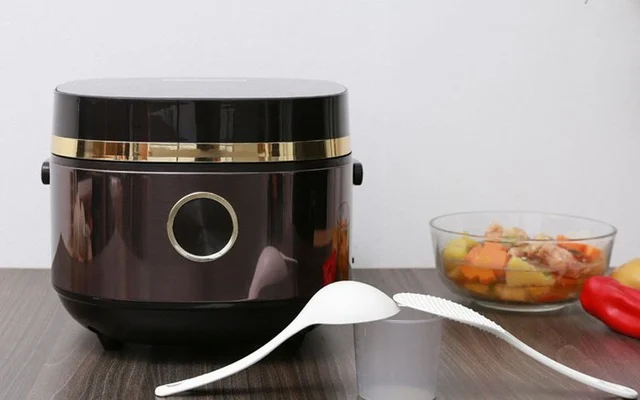
Induction rice cookers primarily operate on the principle of magnetic induction, using eddy currents to generate heat.
Induction rice cookers cook rice in 40-60 minutes, while conventional rice cookers only take 20-30 minutes.
Looking at the power consumption, one might assume that an induction rice cooker will definitely use much more electricity than a regular rice cooker. However, the difference lies in the cooking cycle, the structure, and the technology used.
Rice cooking cycle
A conventional rice cooker, when plugged in and the cooking function is selected, will use maximum power to heat and cook the rice grains, allowing them to expand and dry out the surface water, before switching to the keep-warm mode.
With an induction rice cooker, the rice is initially soaked in warm water until it swells evenly. Towards the end of the cooking cycle, the pot increases its power to maximum, generating the highest amount of heat to cook the rice and drain the water in 5 minutes. The rice grains cool and heat up in a flash, so they don't swell or break apart.
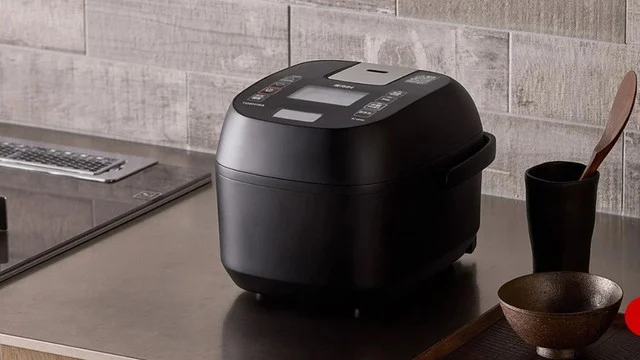
Looking at the power consumption, one might assume that an induction rice cooker will definitely use much more electricity than a regular rice cooker. However, the difference lies in the cooking cycle, the structure, and the technology used.
Therefore, induction rice cookers only concentrate high power during the last 5 minutes of the cooking process to cook the rice thoroughly. So, even though the cooking time is longer than a conventional rice cooker, the electricity consumption is not excessively high.
Thermal sensor relay, pot design with 5-7 layers of thick material.
Induction rice cookers are equipped with a temperature sensor and a relay . When the desired temperature is reached, the thermal relay cuts off power to the heating element. When the temperature drops to a certain limit, the relay resumes power to the heating element, saving up to 35% on electricity compared to conventional rice cookers.
In addition, induction rice cookers with very thick inner pots, constructed from 5-9 layers of magnetic alloy, allow the inner pot to heat up quickly, retain heat effectively, improve rice quality, and contribute to reducing energy consumption for heating.
In addition, the ability to retain heat for a considerable time after cooking means that induction rice cookers keep rice warm for extended periods without needing to use the keep-warm function.
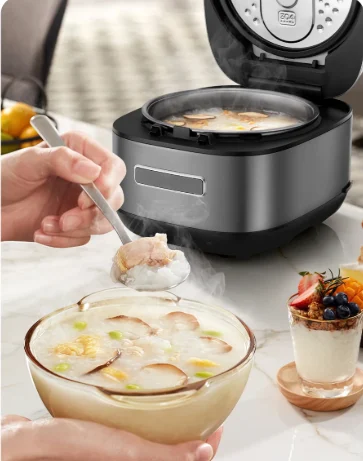
Avoid opening the lid too often: Each time you open the lid, heat escapes, causing the pot to consume more electricity to reheat.
Thanks to this, when cooking rice or other dishes using an induction rice cooker, users will have delicious, nutritious meals without consuming too much electricity.
How to use an induction rice cooker to save electricity.
Choose the right rice cooker capacity: Larger capacity rice cookers consume more electricity because they need to heat a large volume of rice and water. Therefore, choose a capacity that suits the number of people in your family.
Use the timer function: Set a timer for cooking rice to optimize cooking time, avoiding having to turn on the rice cooker too early or leaving it on the keep-warm mode for too long.
Avoid opening the lid too often: Each time you open the lid, heat escapes, causing the pot to consume more electricity to reheat.
Clean the pot regularly: Ensure the inner pot and other parts are always clean to increase heat transfer efficiency, helping the pot operate more effectively and save electricity.