



For every Parisian and Venetian who loves tourists – and their cash – there are droves more who would happily never again hear the clack-clack of suitcases or clumsy attempts to order a beer in the vernacular.
Europe has a greater appeal than ever – in 2025, the continent welcomed a record 793 million international visitors – but it’s also never been more unevenly loved. Three of the most visited cities are trying to manage their popularity; Venice now has a peak day access fee, Amsterdam aims to have fewer than 20 million overnight visitors annually, and Barcelona wants to phase out its tourist flats by 2028. As a result, the most well-known alternatives – the likes of Milan, Porto and Rotterdam – are getting even busier.
So what’s the next step for savvy travellers? Why, seeking out these countries’ splendid third cities, of course: places which are often culturally rich, historically important and big enough to sustain a long-weekend visit, but where you’ll also encounter lower prices and locals delighted to show off the charms of their neighbourhood. Overcrowded capital cities are going nowhere. Explore somewhere new, and you might even like it better.
Sweden
Malmö
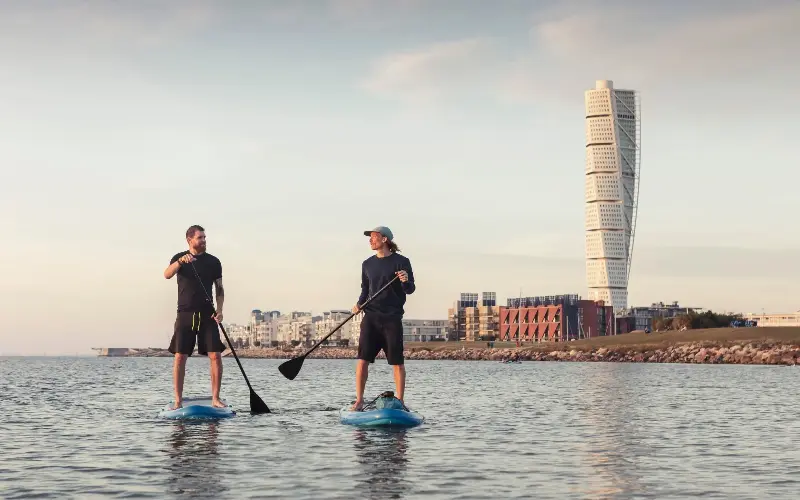
While not as stately as Stockholm, nor as grand as Gothenburg, Sweden’s third-largest city is youthful, diverse and the perfect size for a short break. Explore cobbled squares, Nordic cafes, canals, design shops and parks dotted with themed playgrounds; sea-swim at Ribersborgs Kallbadhus and navigate by way of the distinctive Turning Torso skyscraper.
Martin Karyd, co-owner of the popular Malmö Saluhall, believes his food market in particular offers an authentic flavour of daily Swedish life: “People, food and languages mix from all over the world here, and that’s when you feel the city’s energy.”
Where to stay: MJ’s Hotel has rooms from £127.
Belgium
Ghent
The third-city appeal of Ghent combines medieval charm with the energy of university students and a fast-growing tech scene, fuelled by one of Belgium’s biggest universities and a steady flow of start-ups.
Soak up the grandeur of gabled houses, the Gravensteen castle and St Bavo Cathedral’s altarpiece, and tap into everyday Flemish life by way of waterside bars, vibrant street art and independent shops. “We’re proud,” says Sofie Bracke, Ghent’s deputy mayor, “to have an urban culture shaped by locals who enjoy the good life.”
Where to stay: 1898 The Post has rooms from £233.
Italy
Trieste
“Our city is rich in its quality of life,” says Carla Movia, a jewellery designer. “We value time spent with family and friends and in nature.” For her, that means local food and wine, eating a pizza in seafront neighbourhood Barcola and buying produce from small nearby farms.
This feeling gives Trieste its third-city energy, along with its north-eastern location; Italian, Austro-Hungarian and Slovenian influences are all evident in its historic port, palaces and Habsburg-era neoclassical quarter. There’s literary history, the dramatic Bora wind, the white 19th-century Miramare Castle and easy access to caves and coast too.
Where to stay: Grand Hotel Duchi d’Aosta has rooms from £226.
Germany
Hamburg
Head to the fish market on a Sunday morning, recommends Ann-Marie Mcaveety from TUI, to get a sense of Hamburg’s character: “Traders selling their catch at full volume, locals queuing for fish rolls and coffee, ships gliding past.”
Germany’s second-largest city by population has a third-city feel; it’s a cooler, unmistakably northern alternative to Berlin and Munich, with a spectacular concert hall and famously alternative nightlife district in St Pauli. “The neighbourhoods tell their own stories,” says Ann-Marie, “from Ottensen’s independent vibes to HafenCity, where you’re surrounded by canals, old warehouses and walkways where goods once flowed off the boats.”
Where to stay: Fairmont Hotel Vier Jahreszeiten has rooms from £407.
Switzerland
Basel
The Rhine is the lifeblood of this city; walk alongside it, swim in it and watch the world go by as you sip a spritz at one of its many riverside buvettes. “The river is the city’s living room,” says Basel-born resident Marco Greiner. “On a warm summer evening, you might see an office worker, student or chief executive floating downstream, side by side.”
Switzerland’s third-largest city, less showy than Zurich or Geneva and sitting where Switzerland, France and Germany meet, has one of Europe’s best museum scenes – along with excellent galleries and design shops – and a handsome old town.
Where to stay: Der Teufelhof Basel has rooms from £233.
France
Lyon
“Travel from antiquity to modernity here – feel the enduring taste of Renaissance and the audacity of contemporary masters in Lyon’s architectural landscape – and explore the city by foot, by bike, by boat, or at your own pace,” suggests Guillemette Naessens of the Musée des Beaux-Arts de Lyon.
This quietly confident city doesn’t have the dominance of Paris or seaside appeal of Marseille, but it does have Roman ruins, traboules (hidden covered passageways), grand squares, lively markets and a renowned gastronomic scene, with a total of 14 Michelin stars. A great base for the Alps and Beaujolais vineyards nearby too.
Where to stay: Cour des Loges Lyon has rooms from £240.
Spain
Bilbao
“While the pintxos bars were the draw for me,” says Jess Ellis, a travel creator, “the surprise of my Bilbao trip was a morning at the iconic Guggenheim. Even if you’re not really an art person, don’t skip it; the building itself is half the experience.”
The museum remains one of Bilbao’s great icons, but repeat visitors consider it about much more than that: the former port-and-steel city of river walks, pintxos rituals and great restaurants has a strong local Basque identity that feels proudly distinct from the rest of Spain.
Where to stay: The Artist Grand Hotel of Art has rooms from £175.
Netherlands
Utrecht
“City life doesn’t get much better than this,” enthuses Sven of @Utrechtalive. His photos capture gorgeous moments “when everything seems to move in harmony. Small boats on the canal and the calm chatter of people dining, in warm sunset colours”.
The Netherlands’ fourth-largest city, less business-focused than Rotterdam and less tourist-saturated than Amsterdam, Utrecht boasts a compact canal network with cafés tucked down at water level along the Oudegracht, medieval lanes and the distinctive, free-standing Dom Tower – a 14th-century Gothic church.
Where to stay: Grand Hotel Karel V has rooms from £217.
Portugal
Braga
Braga reveals one of the oldest and most devout sides of Portugal, believes José Almeida of the tourist board. Founded by the Romans as Bracara Augusta, it later became one of the country’s most important religious centres; “Bom Jesus do Monte, with its Baroque staircase, is proof of this”.
It is not Portugal’s third city by size, but it feels like the country’s great northern counterpoint to Lisbon and Porto: spiritual, with ancient Baroque churches, youthful, thanks to its university; and green, close to Minho’s hills, gardens, sanctuaries and fertile countryside.
Where to stay: Porta Nova Collection House has rooms from £69.
Denmark
Odense
You’d expect the birthplace of Hans Christian Andersen – author of The Little Mermaid and The Ugly Duckling – to have a fairytale feel, and Denmark’s third-largest city, on Funen Island, delivers. Wander along cobbled lanes, taking in colourful old houses, statues, murals and the greenery of 150 parks.
Worth a visit are the modern museum dedicated to HC Andersen and Storms Pakhus; Bargroup’s Bjørn Hentze describes the former warehouse turned street-food market as a place where locals and tourists can experience authentic Funen through food and lively events.
Where to stay: First Hotel Grand has rooms from £133.