


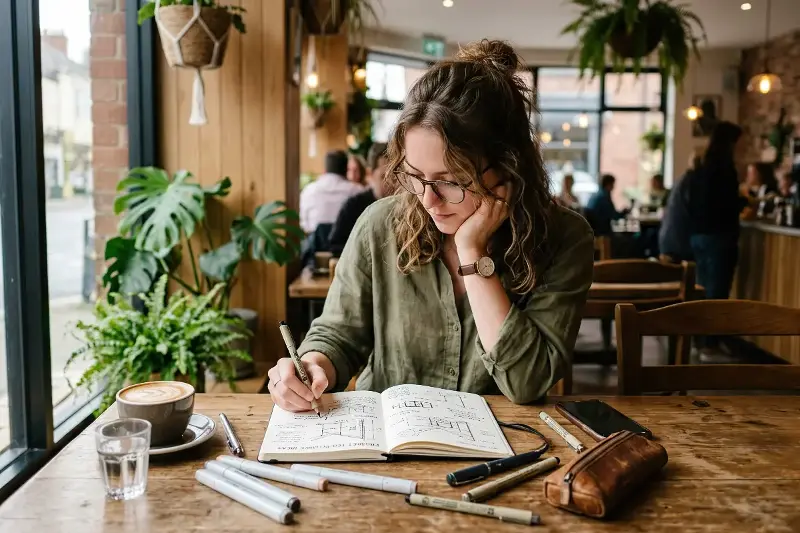
A sketchbook can look deceptively simple: a collection of blank pages, a pencil, perhaps a few marks made while waiting for a warm drink. Yet this small object possesses a remarkable ability to change how people notice the world, solve problems, and trust their own ideas. Unlike a formal art project, a sketchbook does not demand a masterpiece; it simply invites a moment of genuine attention.
These small books are potent instruments for personal growth and artistic exploration. The practice of making quick visual notes trains observation, reduces perfectionism, and creates a private sanctuary where imagination thrives.
Why Small Pages Feel Less Intimidating
Large canvases can generate overwhelming pressure, whereas a blank page in a pocket-sized notebook feels entirely manageable. It asks for five minutes rather than an entire afternoon. This low barrier is vital because new habits last when they are easy to start.
- Friction reduction: Keeping a sketchbook in a bag, near a bed, or on a desk means the first step is already complete without needing studio setup.
- Freedom to be imperfect: Awkward hand proportions or accidental coffee spots add character rather than ruin the page.
- A experimental laboratory: Treat pages as places to test ideas rather than pristine gallery displays.
The Brain Benefits of Daily Observation
Drawing is far more than crafting an image; it is a fundamental way of deep seeing. When sketching a simple houseplant, the mind slows down to notice stem directions, leaf folds, light patterns, and subtle negative spaces.
This focused attention can be deeply restorative. Engaging in creative tasks supports stress reduction by shifting focus away from daily worries toward a concrete, satisfying activity. Sketching offers a refreshing pause from endless digital notifications and mental clutter.
Regular practice also dramatically improves visual memory and cognitive flexibility. Translating three-dimensional objects onto flat paper requires active choices about what details truly matter, strengthening overall creative thinking.

A Safe Place for Imperfect Ideas
Many adults stop drawing because they compare their rough work with polished illustrations seen online. In reality, even seasoned creators build skill through endless unfinished attempts, repeated studies, and messy trials.
A private sketchbook comfortably holds:
- Unfinished thoughts and loose visual ideas
- Expressive handwriting, tickets, and quick diagrams
- Imaginary inventions without any pressure for perfection
Embracing poor drawings is surprisingly liberating. By drawing a shoe in two minutes or tracing a portrait without lifting the pen, one builds tolerance for imperfection—a mindset that carries into writing, learning, and everyday problem-solving.
How a Tiny Routine Builds Momentum
Consistency matters far more than session length. Ten minutes of sketching most days transforms creative confidence faster than a single ambitious marathon every few months.
Connecting sketching to an existing routine—often called habit stacking—makes the action automatic. Try drawing while sipping morning tea, taking a small break at lunch, or sketching one object before bed. Simple prompts, such as drawing the contents of a pocket or trying different angles of a cup, prevent decision fatigue.
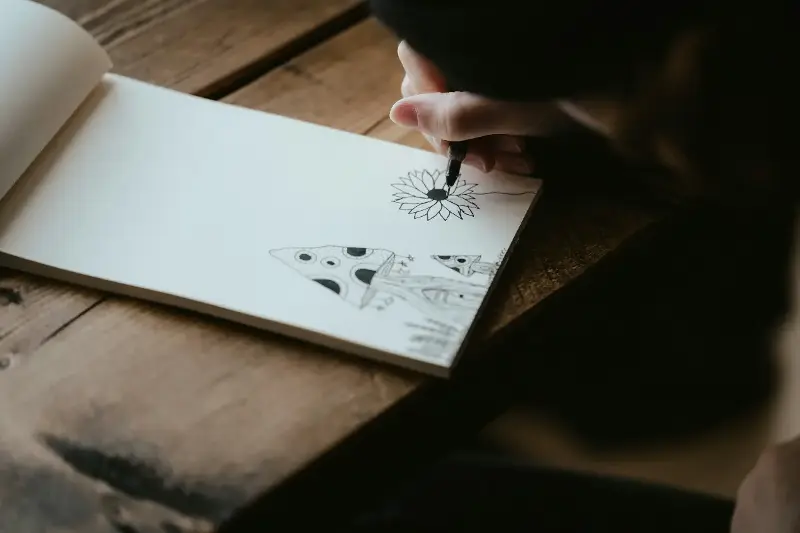
Sketchbooks as Personal Archives
Over months and years, filled notebooks become rich records of personal history. They preserve changing interests, places, moods, and visual discoveries. Looking back at old pages makes progress visible, showing how confidence and line quality have naturally evolved over time.
Ultimately, the best sketchbook is simply the one that gets used. Whether using a ballpoint pen on cheap paper or watercolor on heavy stock, limited tools often spark the most inventive choices. Start with a promise that is impossible to fail: one line, one shape, or one minute a day. Creative growth begins quietly when we decide to look just a little closer.