



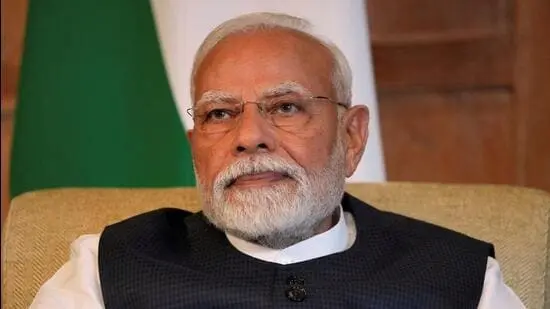
Prime Minister Narendra Modi on Tuesday chaired a high-level meeting of secretaries of central ministries and departments, directing the country’s top bureaucracy to accelerate governance reforms, improve administrative efficiency and fast-track implementation of the government’s long-term development agenda under the Viksit Bharat 2047 vision.
The meeting, also attended by cabinet secretary TV Somanathan, principal secretary to the prime minister PK Mishra and principal secretary-2 to PM Shaktikanta Das, and the secretary of the department of military affairs and secretaries from key ministries and departments, was among Modi’s first full-secretary-level interactions of the current financial year.
According to officials familiar with the deliberations, the review aimed to align the Centre’s administrative machinery with the government’s policy priorities for the second half of 2026, take stock of progress on key governance initiatives, and identify areas requiring faster execution.
“A major focus of the discussions was improving the Ease of Doing Business (EoDB) by removing administrative bottlenecks, reducing procedural delays and simplifying regulatory compliance across sectors. Officials reviewed measures to strengthen India’s investment climate through reforms designed to make government processes more efficient and predictable,” said an official, asking not to be named.
The meeting also examined initiatives to improve the Ease of Living (EoL) through citizen-centric governance reforms. The bureaucrats discussed measures to streamline public service delivery, enhance institutional responsiveness and improve coordination among ministries to ensure quicker implementation of government programmes.
PM Modi also reviewed progress under the government’s ambitious Viksit Bharat 2047 roadmap, which seeks to transform India into a developed nation. The officials presented updates on long-term developmental targets, implementation strategies and inter-ministerial coordination required to achieve the vision.
“Officials briefed the Prime Minister on the status of implementation, reform milestones achieved and pending initiatives across departments. The meeting also placed significant emphasis on integrating next-generation technologies into governance. Ministries presented updates on the adoption of artificial intelligence, digital platforms and data-driven decision-making tools aimed at improving operational efficiency, reducing delays and strengthening service delivery,” a second official familiar with the development
Individual secretaries are understood to have made presentations on the performance of their respective ministries, outlining policy achievements, implementation challenges and progress on reform commitments. The exercise also served as a platform for identifying cross-sectoral issues requiring coordinated action across multiple departments.
Tuesday’s review comes as the Centre continues to sharpen its focus on administrative efficiency, regulatory simplification and outcome-based governance. The government has increasingly emphasised measurable reforms, faster decision-making and improved coordination between ministries as it enters the latter half of its current term.
The meeting was also PM Modi’s second major interaction with the country’s top bureaucracy in less than two months.
On May 21, Modi chaired a joint meeting of union ministers and secretary-level officials to prepare regulatory roadmaps aligned with the Viksit Bharat 2047 vision. During that interaction, he had called for faster decision-making, urged officials to ensure government files moved without unnecessary delays and stressed the need for structural reforms to simplify governance.
Describing Viksit Bharat 2047 as a long-term national commitment rather than merely a slogan, PM Modi had asked ministries to prepare clear implementation strategies and improve inter-departmental coordination.
The May review also included an assessment of ministries’ performance, with lower-ranked departments advised to take corrective measures to improve delivery and outcomes. According to sources, the exercise was treated as a mid-term review of the government’s overall functioning.
The Prime Minister additionally asked ministers to engage more actively with citizens and communicate the government’s achievements over the past 12 years, underscoring that effective governance must be accompanied by greater public outreach and accountability. Tuesday’s meeting built on those priorities, with a renewed emphasis on execution, technology-driven governance and time-bound reforms across the Central government.